Az ISMS Builder már magyarul is elérhető
mit ad egy IT-menedzsernek és egy megfelelési szakértőnek, és mennyi munkát takaríthat meg vele, aki induló ISMS-t épít
what it gives an IT manager and a compliance specialist, and what it can save a team building a new ISMS

Röviden, előismeret nélkül. Az ISMS (információbiztonsági irányítási rendszer, IBIR) azoknak a szabályzatoknak, kockázatoknak, intézkedéseknek és bizonyítékoknak a rendszere, amelyet az ISO 27001 szabvány megkövetel, és amely a NIS2 szerinti kockázatkezelési intézkedések (21. cikk) dokumentálását is támogathatja. Az ISMS Builder egy nyílt forráskódú program ennek vezetésére, amelyet a saját szerveredre telepíthetsz. Mostantól a felülete, az útmutatói és a mintadokumentumai magyarul is megvannak. Új ISMS építéséhez vagy induló ISO 27001 bevezetéshez hasznos kiindulópont lehet: sablonokat, nyilvántartásokat és működtetési keretet ad. A projekt saját leírása szerint nem központi nagyvállalati rendszernek készült.
An English version of this article follows below. Jump to the English version.
Tegnap este bekerült az ISMS Builder fő ágába a magyar fordításhoz küldött módosítási javaslatom. Ez a cikk arról szól, mit kap ezzel az, aki magyarul akar információbiztonsági irányítási rendszert vezetni, és mit takaríthat meg vele, aki új ISMS-t épít, vagy ISO 27001 bevezetésbe kezd.
Az ISMS Builder egy önállóan telepíthető, nyílt forráskódú webalkalmazás, amely az ISO 27001, a NIS2, a GDPR és további keretrendszerek szerinti nyilvántartásokat és munkafolyamatokat fogja össze. A cikket két olvasónak írom: az IT-menedzsernek, aki azt kérdezi, mit kap és mibe kerül az üzemeltetése, és a megfelelési szakértőnek, aki azt, hogy egy auditor előtt mit lehet vele megmutatni. Röviden azt is leírom, hol vannak a korlátai.
1. Mi került be, és mi nem
A módosítási javaslatom (pull request) 2026. október 20-án este, magyar idő szerint 20:11-kor került be a projekt fő ágába. Érdemes pontosan megmondani, mi volt benne. A javaslat a felület 1815 fordítási kulcsát, az útmutatók és az értékelési kérdések címeit, valamint 11 magyar nyelvű dokumentumot tartalmazott.
A teljes magyar csomag további részét ezen felül a projekt szerzője készítette el: október 16-án külön módosításokkal fejezte be a munkát. Ezekkel minden szöveg a nyelvválasztó szerint jelenik meg; a szerver hibaüzenetei, az e-mailek, a riportok és a naptár a felület nyelvén szólnak; a beépített kontrollok és a NIS2-ellenőrzőlista szövegei és az útmutatók magyarul is megvannak (a BSI-blokkok kivételével); és van magyar mintaadat-csomag. Ezért nem állítom, hogy az egész az én munkám.
A fő ág mostani állapotában magyarul megvan a mintaadat-csomag, 14 dokumentum (13 modulleírás és a sablonok használati útmutatója; ebből 11 volt a javaslatomban, a többi három, az auditok, az intézkedés-nyilvántartás és a mobil-szinkron modulleírása, később került be), 9 útmutató-fájl és egy, a magyar nyelvet ellenőrző teszt. Két dolgot nem állítok. Az egyik, hogy minden felületi szöveg, riport és e-mail magyar: a módosítások erre törekednek, de a teljes lefedettséget nem mértem. A másik, hogy az ISO 27001 kontrollszövegei magyarul is megvannak. Ezek szándékosan nincsenek a szoftverben, a szabvány szerzői joga miatt; az adminisztrátornak kell importálnia őket egy mellékelt szkripttel.
2. Mit ad egy IT-menedzsernek
Egy IT-menedzser első kérdése szerintem nem a funkciólista, hanem az, hogy egy helyen van-e a szabályzat, a kockázat, az eszköz és a szállító, és hogy mindegyiknek van-e felelőse. Az alábbi áttekintés a projekt saját leírásán alapul.
| Terület | Mit ad (a projekt leírása szerint) | Mire figyelj |
|---|---|---|
| Szabályzatkezelés | Sablonok, verziózás, életciklus (tervezet, átvizsgálás alatt, jóváhagyott, archivált); a szabályzat elolvasása belépés nélkül, egyedi hivatkozással visszaigazolható | A visszaigazolás nyoma bizonyíték lehet, de csak akkor, ha a hivatkozás tényleg eljut a címzettekhez |
| Kockázatok és intézkedések | Kockázatkezelés, biztonsági célok, egy közös nyilvántartás a kockázatkezelési intézkedésekre, az audit-megállapításokból eredő feladatokra, a vezetői intézkedésekre, valamint a technikai és szervezési intézkedésekre | Kvantitatív kockázatpontozás nincs; az ütemtervben szerepel |
| Eszközök | Bizalmasság, sértetlenség, rendelkezésre állás és hitelesség mint védelmi cél, függőségek öröklése, osztályozás | Az eszközleltár naprakészen tartása továbbra is emberi feladat |
| Szállítók, szerződések | Szállítókezelés, jogi és szerződés-nyilvántartás | Nincs külön megjegyzés |
| Üzletmenet-folytonosság, képzés | Üzletmenet-folytonossági tervek, képzési nyilvántartás | Nincs külön megjegyzés |
| Incidensek | Beérkező incidensek listája, belépés nélkül elérhető nyilvános bejelentő űrlap | Nyilvános űrlapnál a visszaélés elleni védelem az üzemeltető dolga |
| Vezetői átvizsgálás, riportok | Vezetői átvizsgálás jegyzőkönyvekkel, megfelelési mátrix, hiányelemzés, CSV-export, naptár | Az ütemezett, e-mailben küldött riport nincs kész |
| Integráció | REST API (80 feletti végpont, OpenAPI-leírással), e-mail értesítés, WebDAV (ownCloud, Nextcloud), Greenbone/OpenVAS-import, Android-alkalmazás offline szinkronnal, opcionális helyi Ollama a kereséshez | Az Android-szinkron csak JSON-tárolással működik; webhookot és egyszeri belépést a forráskódban nem találtam |
Ezek nyilvántartások és munkafolyamatok. Azt nem helyettesítik, hogy valaki ténylegesen elvégzi az átvizsgálást, felel az intézkedésért, és időben jóváhagy. Az eszköz azt segíti, hogy ez nyomot hagyjon.
3. Mit ad egy megfelelési szakértőnek
Megfelelési szemmel az ISMS nem a szoftverről szól, hanem arról, hogy az auditor előtt a szabályzat, a kockázat, az intézkedés és a bizonyíték összeér. Az auditorok általában három dolgot keresnek: hogy a hatókör és a kockázatok dokumentáltak, hogy az alkalmazhatósági nyilatkozat minden kontrollnál indoklást tartalmaz, és hogy az intézkedésekhez bizonyíték tartozik, nem csak szabályzat. Bővebben a megfelelés próbájáról és a governance és auditálhatóság kérdéséről szóló cikkeimben írtam.
- Alkalmazhatósági nyilatkozat. A leírás szerint 147 beépített kontroll van benne öt keretrendszerből (BSI IT-Grundschutz, NIS2, EUCS, az uniós MI-rendelet és a kiberellenállósági rendelet), keresztleképezéssel és hiányelemzéssel. Az ISO 27001 kontrolljait, ahogy fent írtam, külön kell importálni. A BSI IT-Grundschutz blokkjai szándékosan németül maradnak, a többi beépített keretrendszer kontrolljai magyarul is megjelennek.
- NIS2. A projekt leírása szerint 30 tételes ellenőrzőlista a NIS2 irányelv 21. cikkének intézkedéseihez, és riasztás a 23. cikk szerinti bejelentési határidőkhöz (az irányelv 24 órát, 72 órát és egy hónapot ír elő, a jelentős incidensről való tudomásszerzéstől számítva). A riasztások e-mailben mennek, ezért SMTP-beállítás nélkül nem kézbesülnek. Magyar szervezetnél a 2024. évi LXIX. törvény (Magyarország kiberbiztonságáról) és végrehajtási rendelete az irányadó, a határidőket ott kell ellenőrizni.
- GDPR. Adatkezelési tevékenységek nyilvántartása, adatfeldolgozói szerződések, adatvédelmi hatásvizsgálat, technikai és szervezési intézkedések, az érintetti kérések sora időzítővel (az eszköz 30 napot számol; a GDPR 12. cikk (3) bekezdése egy hónapot ír elő, amely indokolt esetben legfeljebb két hónappal hosszabbítható), külön 72 órás időzítő az adatvédelmi incidensekre (GDPR 33. cikk: a felügyeleti hatóság felé, a tudomásszerzéstől számítva, a NIS2 szerinti bejelentéstől függetlenül; az eszköz a megadott felfedezési időponttól számol, amely alapértelmezésben a rögzítés ideje, ezért a tényleges tudomásszerzést magadnak kell rögzítened), és törlési napló.
- Audit. Ellenőrzőlisták, éves auditprogram, audit-megállapítások és CSV- vagy PDF-export.
Az eszköz ebből a nyilvántartást és a nyomkövethetőséget adja: egy intézkedés kötődik a kockázathoz, a kontrollhoz és a szabályzathoz. A tartalmat nem adja. Hogy a kockázatértékelés jó-e, és az intézkedés működik-e, az emberi munka marad. Ha egy NIS2-ellenőrzőlista ki van töltve, abból nem következik, hogy a szervezet megfelel a NIS2-nek. A szoftver tehát megkönnyíti a megfelelést, de nem teszi megfelelővé a szervezetet.
A magyar nyelvnek itt azért van súlya, mert a szabályzatot, a kockázatot és a vezetői átvizsgálást azok kezelik és hagyják jóvá, akik nem feltétlenül olvasnak szívesen német vagy angol nyelvű szabályzatot. Ezt a saját meglátásomként mondom, mérésem nincs rá.
4. Induló ISMS vagy ISO 27001 bevezetés: mit takaríthatsz meg
Szerintem itt adhatja a legtöbbet. Aki most épít új információbiztonsági irányítási rendszert, vagy most indít ISO 27001 bevezetést, annak az első hónapokban általában három dolog viszi el a legtöbb időt: a szabályzatokat üres lapról írja, a nyilvántartásokat táblázatokban vezeti, és nincs megszabott ritmusa az átvizsgálásnak, az auditnak és a bizonyítékgyűjtésnek. Az ISMS Builder mindhárom területre ad kiinduló keretet, amelyre lehet építeni.
Időmegtakarításra nem mondok számot, mert mérésem nincs. A munka jellegét viszont le lehet írni: hol lehet kevesebb dokumentációs munkával, kevesebb kézi nyilvántartással és kevesebb külső tanácsadói órával számolni, és hol nem. Az alábbi táblázat a bevezetés lépéseihez rendeli, mit ad az eszköz a projekt leírása szerint, és mi marad emberi munka.
| Lépés | Mit ad az eszköz (a leírás szerint) | Emberi munka marad |
|---|---|---|
| Szabályzatok, dokumentáció | Szabályzat-sablonok verziózással és életciklussal, sablon-használati útmutató, 9 magyar útmutató-fájl, magyar mintaadat-csomag | A tartalom testreszabása a szervezetre: a sablon kiindulópont, nem kész szabályzat |
| Kockázatértékelés, alkalmazhatósági nyilatkozat | Kockázatkezelés; alkalmazhatósági nyilatkozat 147 beépített kontrollal öt keretrendszerből (az ISO 27001 Annex A ezek között nincs), keresztleképezéssel és hiányelemzéssel | A kockázatok azonosítása és értékelése, az indoklás minden kontrollnál. Az ISO 27001 kontrollszövegeit külön kell importálni |
| Eszköz- és szállítói nyilvántartás | Eszközkezelés védelmi célokkal, osztályozással, függőségekkel; szállítókezelés; szerződés-nyilvántartás | Az adatok felvétele és karbantartása |
| Tudatosság, képzés | Képzési nyilvántartás; szabályzat-visszaigazolás belépés nélkül, egyedi hivatkozással | A képzés megtartása; annak mérlegelése, hogy a visszaigazolás elég-e bizonyítéknak (e-mail-kampány módban a hivatkozás címzettenként egyedi, rögzíti az időpontot és az IP-címet, de nincs belépés, és a hivatkozás továbbítható) |
| Belső audit | Ellenőrzőlisták, éves auditprogram, audit-megállapítások, CSV- és PDF-export | Az audit elvégzése és az ítélet |
| Vezetői átvizsgálás | Irányítás modul átvizsgálási jegyzőkönyvekkel; megfelelési mátrix és hiányelemzés riportként | A döntések meghozatala |
| Intézkedések, bizonyíték | Közös intézkedés-nyilvántartás; a belépés, létrehozás, módosítás és törlés naplózása; nyomkövethetőség | Az intézkedés elvégzése. A naplót ne tekintsd manipuláció-állónak, mert ez még ütemterv-pont |
| Incidensek, NIS2 | Incidens-lista és nyilvános bejelentő űrlap; 30 tételes NIS2-ellenőrzőlista és riasztás a bejelentési határidőkhöz | Az incidens kezelése és a bejelentés |
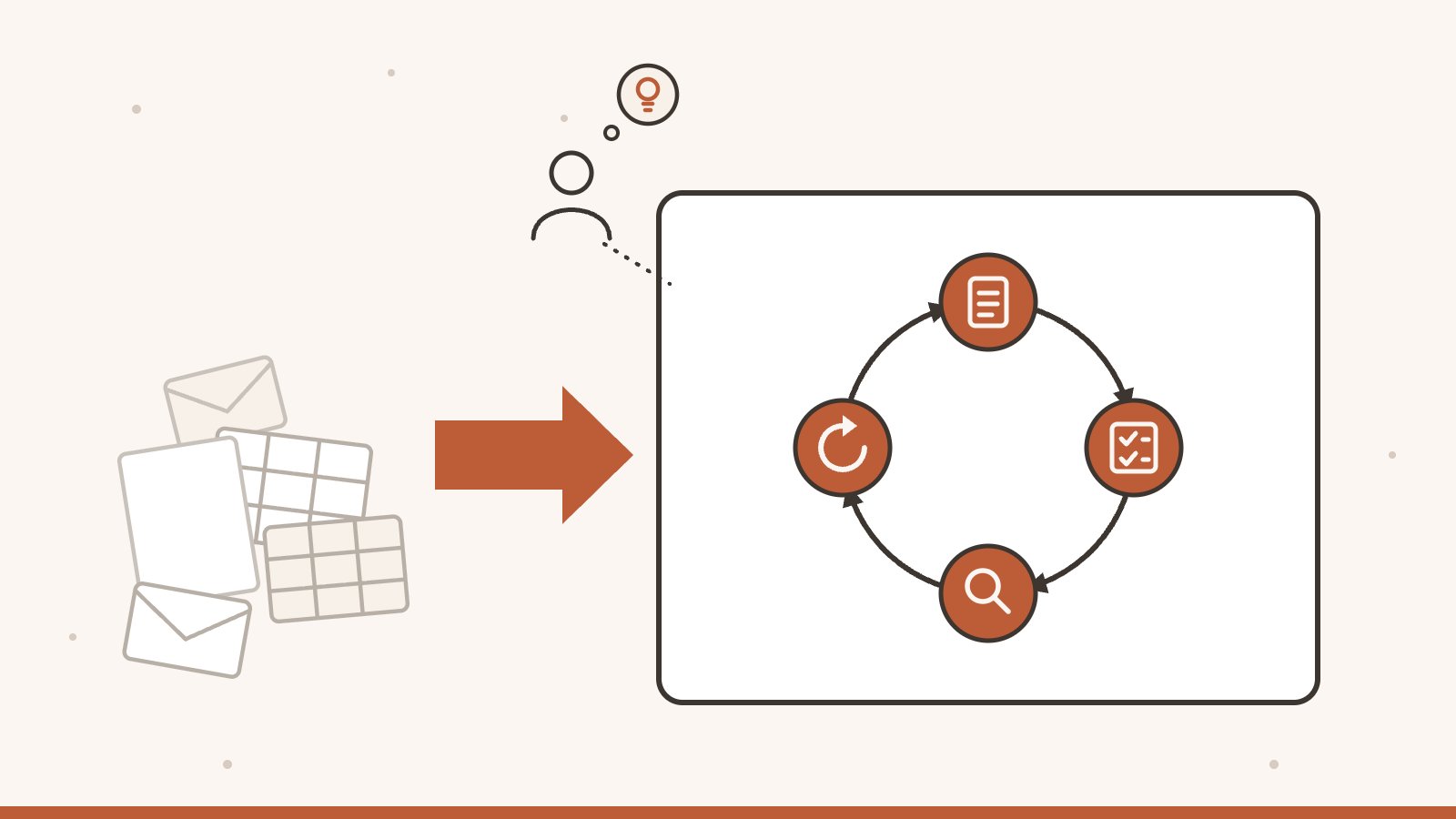
Erőforrás. Eszköz nélkül egy induló ISMS-nél három munkát külön kell megoldani: a dokumentációt, a nyilvántartásokat és a működtetés ritmusát. A sablonok és az útmutatók csökkenthetik a dokumentációs munkát, mert nem üres lapról indulsz. A beépített nyilvántartások kiválthatják a kézzel vezetett táblázatokat. Az átvizsgálások, auditok és intézkedések kerete pedig segít rögzíteni, ki mikor mit csinál. Elmaradhat így néhány külső tanácsadói óra is: az, amelyet a struktúra felépítésére és a nyilvántartások kialakítására költenél. A tanácsadó tudására ott marad szükség, ahol ítéletet kell hozni: a hatókörnél, a kockázatok értékelésénél és a szabvány értelmezésénél. Ezt az eszköz nem váltja ki. Az eszköz használata nem jelent tanúsítást: azt független tanúsító szervezet auditja adja, és a belső audit pártatlanságát sem pótolja.
Szerepkörök. A beépített szerepkörök (például szerkesztő, osztályvezető, auditor, adminisztrátor) azt segítik, hogy a feladatok szétoszthatók legyenek, és a szabályzat a tervezettől a jóváhagyottig mindig ugyanazon az úton menjen végig, ne levelek között vándoroljon. Így az induló ISMS felelősségei az első naptól látszanak az eszközben, nem csak egy ember fejében. Ezt a leírásból olvasom ki, a szerepkörök finomságait nem vizsgáltam.
A korlátok röviden. A projekt saját leírása szerint kis ISMS-csapatra készült, nem többbérlős termék, egy karbantartó viszi főállás mellett, formális támogatási szerződés nincs. Egyszeri belépés (SAML, OIDC, LDAP) nincs a kódban, a magas rendelkezésre állás tervként szerepel, a napló manipuláció-állósága és az audit-biztos törlés az ütemtervben szerepel. Független biztonsági auditot és teljesítménymérést nem találtam. A telepítés, a mentés és a frissítés az üzemeltetőé, az AGPL-3.0 feltételeit pedig egy cégnél a jogi osztálynak át kell néznie.
Mindez nem akadályozza, hogy jó kiindulópont legyen: új ISMS-hez, induló ISO 27001 bevezetéshez, és nagyobb cégnél is egy új részleg vagy leányvállalat rendszeréhez, kísérleti projekthez vagy egységes dokumentációs alaphoz, ahol a gyors indulás és a közös szerkezet számít. Ha most indulsz, érdemes először a mintaadattal kipróbálnod, illik-e a szerkezet a szervezetedhez, és csak utána költeni rá munkát. Hogy egy nagyobb szervezet mit vár el egy új rendszertől, arról (más témában, egy AI-flottáról, de rokon szempontokkal) az enterprise-érettség rétegéről szóló cikkemben írtam.
5. Ha kipróbálnád
A README szerint kipróbálni egyszerű: letöltöd a forráskódot, telepíted a függőségeket, létrehozol egy beállításfájlt (a titkos kulcs megadása kötelező), és elindítod. A README szerint Docker-kép is van (amd64 és arm64) a ghcr.io/coolstartnow/isms-builder címen; a projekt ezt karbantartási kísérletnek nevezi, és visszavonhatja, ezért érdemes a tárolóban ellenőrizni. Első belépéskor a mintaadat nyelve választható (német, angol, francia, holland, magyar), vagy üres rendszerrel indulhatsz. Alapértelmezett belépési adatok vannak, amelyeket azonnal le kell cserélni.
Három dolgot érdemes tudni. A mintaadat és az éles adat soha nem keveredhet: éles használathoz friss telepítés kell, a mintaadat-visszaállítás (Demo Reset) és -betöltés (Demo Import) csak a bemutató-példányra való, nem mentési, visszaállítási vagy migrációs eszköz. A mentés, a titkosított kapcsolat, a rendszer biztonsági megerősítése és a frissítés a te dolgod. És vigyázz a másolatokkal: a README szerint hamis, ZIP-ként vagy telepítőként terjedő változatok léteznek, ezért kizárólag a projekt saját tárolójából tölts le.
Ha cégnél próbálnád, ezt döntsd el előre. Ki viszi tovább, ha a karbantartó kiesik? Kezelhető-e a felhasználók felvétele és megszüntetése egyszeri belépés nélkül? Támaszkodik-e az audit a naplóra, és elég-e erre a mai napló? Hová kerül a mentés, és ki próbálja ki a visszaállítást? Átnézte-e a jogi osztály az AGPL-3.0 feltételeit?
6. Amit nem mértem
Ennek az írásnak az alapja a projekt forráskódja és dokumentációja. Nem futtattam az alkalmazást, terhelésvizsgálatot nem végeztem, és a tesztek számát sem ellenőriztem. A README számai egymásnak ellentmondanak, ezért teszt- és verziószámot nem idézek.
7. Köszönet a szerzőnek
A projekt README-je és közreműködői listája szerint az ISMS Builder szerzője és karbantartója Claude Hecker (@coolstartnow). Köszönöm neki az ISMS Buildert, azt, hogy egy főállás melletti munkát nyílt forráskódként, AGPL-3.0 licenc alatt tett közzé, és hogy a magyar fordítást befogadta, a közreműködők között engem is megnevezett, és a magyar nyelvi támogatást végig is vitte.
Használtál már ilyen eszközt, vagy hiányzik belőle valami a magyar nyelvű használathoz? Egy rövid vélemény elég. Ha hibát látsz a fordításban vagy a programban, ne tegyél közzé kihasználható részletet. Emailben vagy LinkedInen privátban keress meg (info@jonasgergo.hu, LinkedIn).
English version
In brief, for readers with no background. An ISMS (information security management system) is the set of policies, risks, measures and evidence that the ISO 27001 standard requires, and that can also support documenting the risk-management measures under NIS2 (Article 21). ISMS Builder is an open-source application for running one, which you install on your own server. Its interface, guidance and sample documents are now available in Hungarian too. It can be a useful starting point for building a new ISMS or starting an ISO 27001 implementation: it provides templates, registers and an operating framework. According to the project's own description, it was not designed as a central enterprise system.
Yesterday evening my pull request with the Hungarian translation was merged into the main branch of ISMS Builder. This article is about what that gives someone who wants to run an information security management system in Hungarian, and what it can save a team that is building a new ISMS or starting an ISO 27001 implementation.
ISMS Builder is a self-hosted, open-source web application that brings together the records and workflows for ISO 27001, NIS2, GDPR and other frameworks. I am writing for two readers: the IT manager, who asks what it gives and what it costs to run, and the compliance specialist, who asks what can be shown to an auditor. I also say briefly where its limits lie.
1. What went in, and what did not
My pull request was merged into the project's main branch on the evening of 20 October 2026, at 20:11 Hungarian time. It is worth saying exactly what it contained. The request contained 1,815 translation keys for the interface, the titles of the guidance and assessment questions, and 11 documents in Hungarian.
The project's author did a further part of the complete Hungarian package on top of that, finishing the work in separate changes on 16 October. With those changes, all text goes through the language selector; the server's error messages, the emails, the reports and the calendar follow the interface language; the texts of the built-in controls and of the NIS2 checklist, and the guidance, exist in Hungarian too (except the BSI blocks); and there is a Hungarian sample-data bundle. That is why I do not claim that all of it is my work.
In the main branch as it stands now, the Hungarian parts are the sample-data bundle, 14 documents (13 module descriptions and the guide to using the templates; 11 of them were in my pull request, the other three, for audits, the measures register and mobile sync, came later), 9 guidance files and a test that checks the Hungarian language. There are two things I do not claim. One is that every interface text, report and email is in Hungarian: the changes aim at that, but I did not measure full coverage. The other is that the ISO 27001 control texts exist in Hungarian. They are deliberately not in the software, because of the standard's copyright; the administrator has to import them with a bundled script.
2. What it gives an IT manager
In my view, an IT manager's first question is not the feature list but whether the policy, the risk, the asset and the supplier are in one place, and whether each has an owner. The overview below is based on the project's own description.
| Area | What it provides (according to the project's description) | What to watch |
|---|---|---|
| Policy management | Templates, versioning, a lifecycle (draft, in review, approved, archived); a policy can be acknowledged without logging in, through a unique link | The acknowledgement trail can be evidence, but only if the link really reaches the recipients |
| Risks and measures | Risk management, security goals, one shared register for risk-treatment measures, actions from audit findings, governance measures, and technical and organisational measures | Quantitative risk scoring is not available; it is on the roadmap |
| Assets | Confidentiality, integrity, availability and authenticity as protection goals, inheritance of dependencies, classification | Keeping the asset inventory current remains a human task |
| Suppliers, contracts | Supplier management, a legal and contract register | Nothing specific to note |
| Business continuity, training | Business continuity plans, a training register | Nothing specific to note |
| Incidents | An inbox of incoming incidents and a public reporting form available without logging in | Protecting a public form against abuse is the operator's job |
| Management review, reports | Management review with minutes, a compliance matrix, gap analysis, CSV export, a calendar | Scheduled reports sent by email are not finished |
| Integration | A REST API (over 80 endpoints, with an OpenAPI description), email notification, WebDAV (ownCloud, Nextcloud), Greenbone/OpenVAS import, an Android app with offline sync, an optional local Ollama for search | Android sync works only with JSON storage; I found no webhooks and no single sign-on in the source code |
These are registers and workflows. They do not replace someone actually doing the review, owning the measure and approving on time. The tool helps to make sure this leaves a trace.
3. What it gives a compliance specialist
From a compliance point of view an ISMS is not about the software but about whether the policy, the risk, the measure and the evidence come together in front of the auditor. In usual audit practice, auditors generally look for three things: that the scope and the risks are documented, that the statement of applicability gives a reason for every control, and that the measures come with evidence, not only a policy. I wrote more about this in my articles on the test of compliance and on governance and auditability.
- Statement of applicability. According to its description it contains 147 built-in controls from five frameworks (BSI IT-Grundschutz, NIS2, EUCS, the EU AI Act and the Cyber Resilience Act), with cross-mapping and gap analysis. As I wrote above, the ISO 27001 controls have to be imported separately. The BSI IT-Grundschutz blocks deliberately stay in German; the controls of the other built-in frameworks also appear in Hungarian.
- NIS2. According to the project's description, a 30-item checklist for the Article 21 measures of the NIS2 Directive, and alerts for the reporting deadlines under Article 23 (the Directive sets 24 hours, 72 hours and one month, counted from becoming aware of a significant incident). The alerts go out by email, so without an SMTP setup they are not delivered. For a Hungarian organisation, Act LXIX of 2024 on the cybersecurity of Hungary and its implementing decree are what applies, so the deadlines have to be checked there.
- GDPR. A record of processing activities, data processing agreements, data protection impact assessments, technical and organisational measures, a queue of data subject requests with a timer (the tool counts 30 days; Article 12(3) GDPR sets one month, which can be extended by up to two further months where justified), a separate 72-hour timer for data breaches (Article 33 GDPR: to the supervisory authority, counted from becoming aware of the breach, independent of the NIS2 notification; the tool counts from the discovery time you enter, which by default is the time of recording, so you have to record the actual moment of awareness yourself), and a deletion log.
- Audit. Checklists, an annual audit programme, audit findings and CSV or PDF export.
From this the tool gives the register and the traceability: a measure is tied to a risk, a control and a policy. It does not give the content. Whether the risk assessment is good and the measure works remains human work. A completed NIS2 checklist does not mean the organisation complies with NIS2. The software makes compliance easier, but it does not make an organisation compliant.
The Hungarian language matters here because policies, risks and management reviews are handled and approved by people who do not necessarily like reading a policy in German or English. I say this as my own view; I have no measurement for it.
4. A new ISMS or an ISO 27001 implementation: what you can save
I think this is where it can help most. Anyone building a new information security management system, or starting an ISO 27001 implementation, usually finds that three things take up most of the first months: writing the policies from a blank page, keeping the registers in spreadsheets, and having no set rhythm for the reviews, the audit and the gathering of evidence. ISMS Builder gives a starting frame for all three, which you can build on.
I give no figure for time saved, because I have not measured it. The nature of the work can be described, though: where you can count on less documentation work, less manual record-keeping and fewer external consultant hours, and where you cannot. The table below sets out, for each step of an implementation, what the tool provides by the project's description, and what stays human work.
| Step | What the tool provides (according to the description) | Human work that remains |
|---|---|---|
| Policies, documentation | Policy templates with versioning and a lifecycle, a guide to using the templates, 9 guidance files in Hungarian, a Hungarian sample-data bundle | Tailoring the content to the organisation: a template is a starting point, not a finished policy |
| Risk assessment, statement of applicability | Risk management; a statement of applicability with 147 built-in controls from five frameworks (ISO 27001 Annex A is not among them), with cross-mapping and gap analysis | Identifying and assessing the risks, and the justification for every control. The ISO 27001 control texts have to be imported separately |
| Asset and supplier registers | Asset management with protection goals, classification and dependencies; supplier management; a contract register | Entering and maintaining the data |
| Awareness, training | A training register; policy acknowledgement without logging in, through a unique link | Actually holding the training; judging whether the acknowledgement is enough as evidence (in email-campaign mode the link is unique per recipient and records the time and IP address, but there is no login and the link can be forwarded) |
| Internal audit | Checklists, an annual audit programme, audit findings, CSV and PDF export | Carrying out the audit and the judgement |
| Management review | A governance module with review minutes; a compliance matrix and gap analysis as reports | Making the decisions |
| Measures, evidence | One shared register of measures; logging of login, creation, change and deletion; traceability | Carrying out the measure. Do not treat the log as tamper-resistant; that is a roadmap item |
| Incidents, NIS2 | An incident list and a public reporting form; a 30-item NIS2 checklist and alerts for the reporting deadlines | Handling the incident and making the report |
Resources. Without a tool, a new ISMS has to deal with three jobs separately: the documentation, the registers and the rhythm of operation. Templates and guidance can reduce the documentation work, because you do not start from a blank page. The built-in registers can replace spreadsheets kept by hand. And the frame for reviews, audits and measures helps to record who does what and when. That can also mean fewer external consultant hours: the ones you would otherwise have spent on building the structure and setting up the registers. The consultant's knowledge is still needed where judgement is required: the scope, the assessment of risks and the interpretation of the standard. The tool does not replace that. Using the tool is not certification: that comes from an audit by an independent certification body, and the tool does not replace the impartiality of the internal audit.
Roles. The built-in roles (for example editor, department head, auditor, administrator) help to distribute tasks, and make a policy follow the same route from draft to approved instead of wandering between emails. This way the responsibilities of a new ISMS are visible in the tool from day one, not only in one person's head. I take this from the description; I did not examine the finer points of the roles.
The limits, briefly. According to the project's own description, it was designed for a small ISMS team, it is not a multi-tenant product, one maintainer runs it alongside a full-time job, and there is no formal support contract. Single sign-on (SAML, OIDC, LDAP) is not in the code, high availability is planned, and the tamper resistance of the log and audit-safe deletion are on the roadmap. I found no independent security audit and no performance measurement. Installation, backup and updates are the operator's job, and in a company the legal department has to review the AGPL-3.0 terms.
None of this stops it from being a good starting point: for a new ISMS, for a starting ISO 27001 implementation, and in a larger company too, for the system of a new department or subsidiary, a pilot project or a common documentation base, where a quick start and a shared structure are what count. If you are just starting, it is worth trying it first with the sample data, to see whether its structure fits your organisation, and only then putting work into it. I wrote about what a larger organisation expects of a new system (in a different context, an AI fleet, but with similar questions) in my article on the enterprise-maturity layer.
5. If you want to try it
According to the README, trying it is simple: you download the source code, install the dependencies, create a configuration file (setting the secret key is mandatory) and start it. According to the README there is also a Docker image (amd64 and arm64) at ghcr.io/coolstartnow/isms-builder; the project calls this a maintenance trial and may drop it, so check the registry first. On first login you can choose the language of the sample data (German, English, French, Dutch, Hungarian), or start with an empty system. There is a default login, which you must replace straight away.
Three things are worth knowing. Sample data and live data must never mix: live use needs a fresh installation, and the demo reset and demo import functions are for the demo instance only; they are not a backup, restore or migration tool. The backup, the encrypted connection, the hardening and the updates are your job. And beware of copies: according to the README, fake versions are circulating as ZIP files or installers, so download only from the project's own repository.
If you are thinking of trying it in a company, decide this beforehand. Who carries it forward if the maintainer drops out? Can user accounts be managed without single sign-on? Does the audit rely on the log, and is today's log enough for that? Where does the backup go, and who tests the restore? Has the legal department reviewed the AGPL-3.0 terms?
6. What I did not measure
This article rests on the project's source code and documentation. I did not run the application, did not load-test it and did not check the test counts. The README's own numbers contradict each other, so I quote no test or version numbers.
7. Thanks to the author
According to the project's README and contributors list, the author and maintainer of ISMS Builder is Claude Hecker (@coolstartnow). My thanks to him for ISMS Builder itself, for publishing a project built alongside a full-time job as open source under the AGPL-3.0 licence, and for accepting the Hungarian translation, naming me among the contributors and then seeing the localisation through to the end.
Have you used a tool like this, or is something missing for using it in Hungarian? A short opinion is enough. If you spot a fault in the translation or in the software, please do not publish any detail that could be exploited. Contact me privately by email or LinkedIn (info@jonasgergo.hu, LinkedIn).