Összegzés és irányok
ahol egy multitenant AI-rendszer ma tart, és merre visz a vállalati út
where a multi-tenant AI system stands today, and where the enterprise road leads
An English version of this article follows below. Jump to the English version.
Ez a négyrészes sorozat záró darabja. Az előző három részben őszintén végignéztem, hol tart egy saját, multitenant AI-ügynökrendszer a megfeleléshez, a napi működtethetőséghez és a formálódó szabványokhoz mérve. Ebben a részben összerakom a képet, és felvázolom, merre visz tovább az út. Nem ígéretként, hanem annak őszinte végiggondolásaként, hogy egy ilyen rendszer honnan hová juthat. A vezérfonal ugyanaz maradt: azt mutatom meg, ami valóban éles, azt is, ami hiányzik, és azt is, hogy a hiányok bezárása milyen sorrendben éri meg.
- Biztonság és megfelelés: GDPR, NIS2, EU AI Act (szeptember 9.)
- Üzemeltethetőség: monitorozhatóság, költség, terheléselosztás (szeptember 11.)
- Szabványosodás: MCP, OpenTelemetry, human-in-the-loop (szeptember 13.)
- Összegzés és a vízionált vállalati fejlesztési irányok (ez a rész, szeptember 15.)
1. A három kép egyben
Ha egyben nézem a három korábbi részt, egy következetes kép rajzolódik ki. Az alap, a tenant-izoláció, a titkok elzárása, a hiba esetén tiltással záró biztonsági kapuk és a naplózott emberi felügyelet, gyártási minőségű. Ezekre lehet vállalati beszélgetést építeni. A hiányok is tiszták, és ami fontos, egy irányba mutatnak: a külső világ felé, vagyis a vállalati eszközökbe való kivezetés felé, illetve néhány formalizálási és egy nagyobb skálázási feladat felé.
Élő, valódi biztonsági hiányból mostanra egyetlen maradt: a szerepkör-alapú hozzáférés még megfigyelő módban fut, tehát kiszámolja és naplózza a döntést, de még nem utasít el. A másik korábban élő hiányt, a törléskor visszamaradó titkokat, időközben bezártam. A többi hiány közül a nyomvonalak és metrikák külső kivezetése, OpenTelemetry-protokollon Tempo-ba és Prometheus-ba, időközben elkészült. Ami marad, a vállalati napló-integráció egy biztonsági műveleti központ felé, az automatikus riasztás és költségkeret, a mintavételezés és az automatikus műszerezés, valamint a vízszintes skálázás, nem biztonsági lyuk, hanem érettségi kiegészítő. Ez a különbségtétel adja a roadmap gerincét.
2. Gyors nyereségek
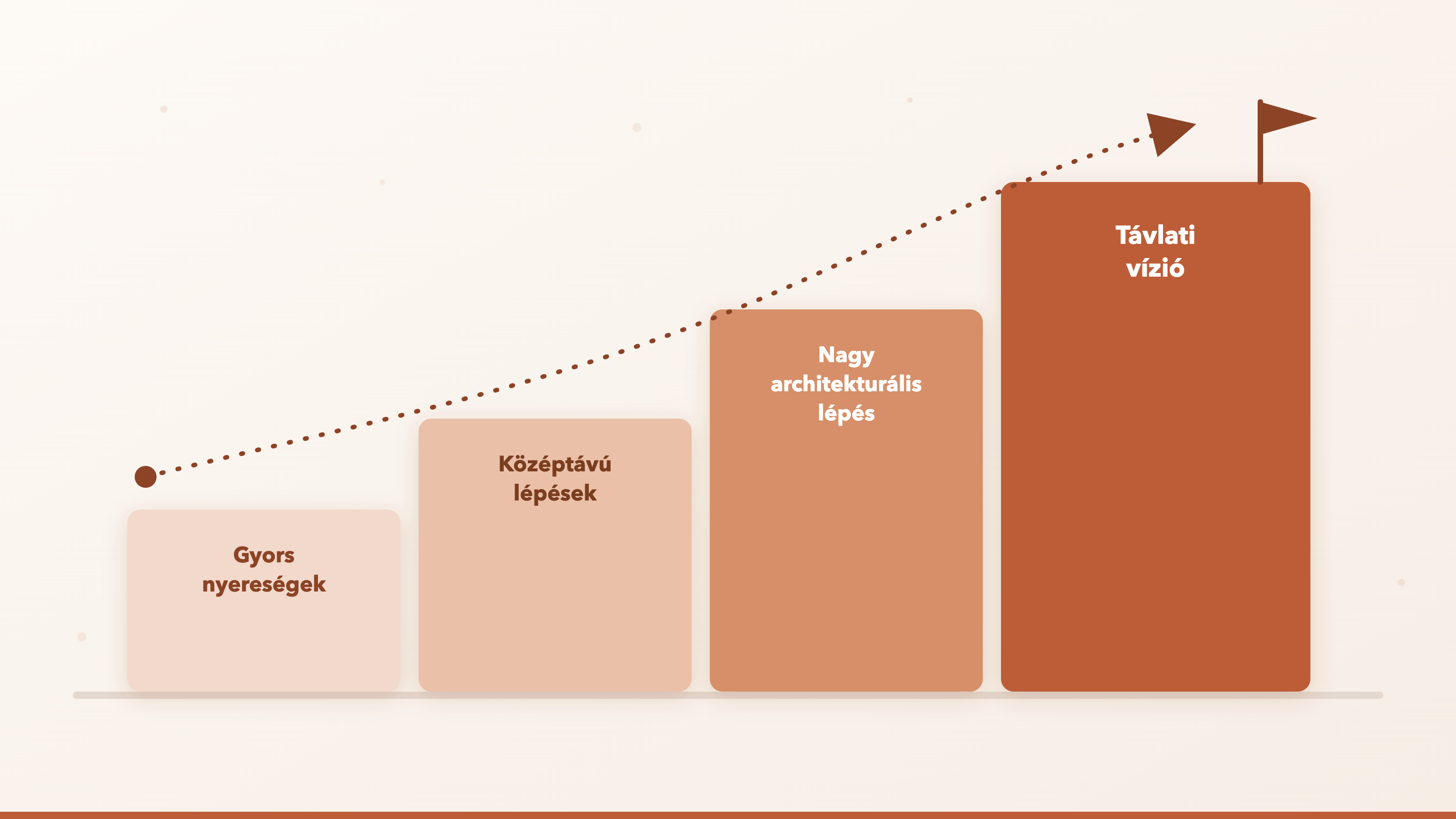
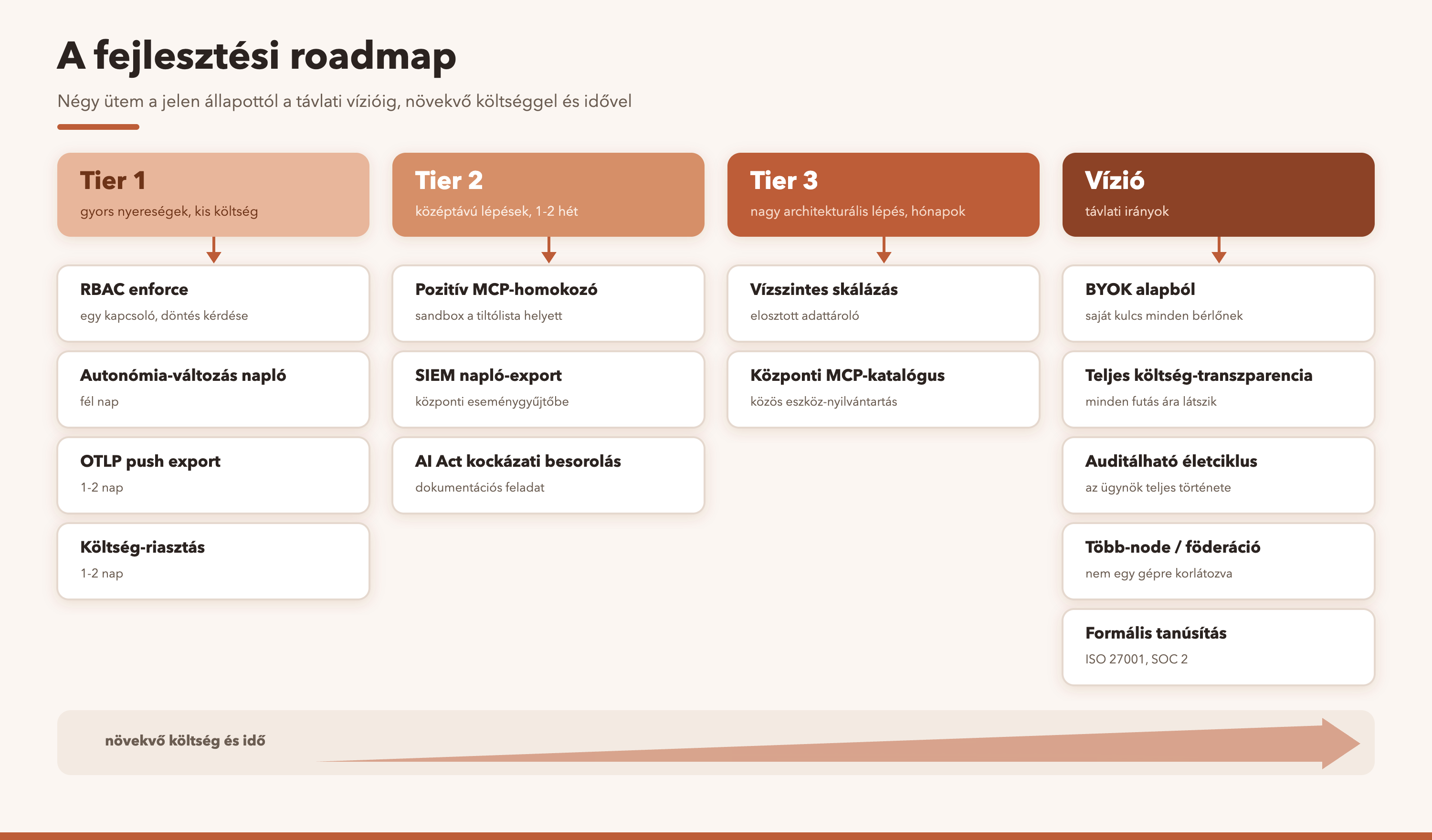
A legnagyobb hozam a legkisebb ráfordítással itt érhető el, és tanulságos, hogy ezek jó része nem is új fejlesztés. A szerepkör-védelem élesítése technikailag egyetlen kapcsoló, a döntés inkább óvatossági kérdés: előbb megfigyelt környezetben ellenőrizni, hogy senkit nem zárna ki tévesen, csak utána élesíteni. Az önállósági szint változásainak naplózása fél napos feladat. A nyomvonalak automatikus kivezetése egy külső gyűjtőbe időközben elkészült: a nyomvonalak OpenTelemetry-protokollon Tempo-ba, a metrikák Prometheus-ba mennek, dashboardból konfigurálható kapcsolattal. És a költségkeret-riasztás is egy-két nap, mert a mérés megvan, csak a küszöböt és az értesítést kell rátenni. Ezek együtt aránytalanul sokat javítanának a vállalati megítélésen.
3. Középtávú lépések
A következő kör már valódi, de kezelhető fejlesztés. Az eszköz-engedélyezésnél a mai tiltólistát érdemes megfordítani egy alapból zárt, pozitív modellre, ami tisztább, de átállási munkával jár a visszafelé kompatibilitás miatt. Az egységes naplót ki lehet vezetni a bevett vállalati biztonsági gyűjtőkbe. És az EU AI Act oldalán a kockázati besorolás inkább dokumentációs és keretezési feladat, mint kód: minden művelet-kategóriához hozzá kell rendelni egy kockázati szintet és annak indoklását. Ide tartozott a törléskor visszamaradó titkok bezárása is, ez időközben elkészült.
4. A nagy architekturális lépés
A legnagyobb tétel a vízszintes skálázás: a rendszer ma egy gépen, megbízhatóan működik, több gép közötti szétterítéshez az adattároló réteget kellene elosztottá tenni. Itt viszont egy fontos, kedvező körülmény van, amit érdemes kiemelni. Időközben minden adatot fájlalapú tárolásról egységesen SQL-alapra tereltem, tehát az adatréteg már ma is SQL. Ettől ez az átállás nem újraírás, hanem egy jól körülhatárolt csere egy elosztott, de SQLite-kompatibilis motor felé (ilyen például a LibSQL vagy a Turso), ami viszonylag gyorsan megvalósítható, és nagymértékben feloldaná a vízszintes skálázás mai korlátját. Vagyis a nagy lépés épp az SQL-alap miatt kisebb, mint amilyennek elsőre tűnik. Éles bevezetést így is csak akkor érdemes, amikor a több-ügyfeles, nagy volumenű terhelés valóban indokolja. Emellé illeszkedik egy központi eszköz-katalógus és felfedezés, ami a formálódó eszköz-szabvány irányába mutat.
5. A távlati vízió
Ha ez a rendszer egy valódi vállalati termék felé indulna, a reális út szakaszos: belső eszközből előbb egy ügyfélnél futó kísérlet, majd korai, több-ügyfeles szolgáltatás, végül érett platform. A tapasztalat szerint a legtöbben az első, kísérleti szakaszt hagyják ki, és épp ott nyílik az olló a terv és a valóság között. És a vállalati belépéshez a technikánál legalább annyira számítanak a nem-technikai feltételek: a formális tanúsítások, az adatfeldolgozói keretszerződések, a szolgáltatási szintek és a támogatási szervezet. Ezek közül a leghosszabb átfutású, a széles körben elvárt információbiztonsági tanúsítás, jellemzően háromnegyed évtől másfél évig tart, tehát nem lehet az utolsó pillanatra hagyni.
Ami egy ilyen platformot megkülönböztethetne, három irány. Az első, hogy az ügyfél által menedzselt kulcsok ne prémium extra, hanem alapállapot legyenek. A második a teljes költség-átláthatóság, vagyis hogy az ügyfél bármikor pontosan lássa, mi mennyibe kerül nála. A harmadik az ügynökök életciklusának auditálhatósága: minden ügynök konfigurációja és az alatta futó modell verziója visszakereshető és igazolható legyen. Ezek nem funkciók, hanem bizalmi alapelvek, és épp ezért érnek többet, mint egy újabb képesség. Nagyobb léptékben pedig ott van a több-csomópontos, akár tenant-dedikált architektúra és az a lehetőség, hogy a rendszer harmadik felek ügynökeit fogadja be egy izolált, biztonságos keretben, ahol maga a platform az összehangoló és a biztonsági réteg.
6. Zárógondolat
Négy részen át próbáltam ugyanazt csinálni: nem azt mondani, hogy kész, hanem pontosan megmutatni, mi kész, mi nincs, és mi éri meg legközelebb. Az alap, a tenant-izoláció, a hiba esetén záró kapuk, az emberi felügyelet, szilárd. A megmaradt egyetlen éles megfelelési kérdés egy tudatos, óvatos kapcsoló előtt áll. A többi nem lyuk, hanem érettségi lépcső, és a sorrendjük is világos. Számomra ez a sorozat igazi tanulsága: egy rendszer megbízhatóságát nem az méri, hogy mit állít magáról, hanem hogy mennyire pontosan ismeri a saját határait.
Ez a sorozat végig saját, önállóan továbbfejlesztett rendszeren végzett elemzés volt, nem termékbejelentés. A célom nem egy kész vállalati platform hirdetése, hanem annak őszinte végiggondolása, mit jelent egy AI-ügynökrendszert komolyan venni, a képességeivel és a határaival együtt.
Van kérdésed, vagy beszélgetnél a témáról? Írj emailben: info@jonasgergo.hu, vagy keress meg LinkedInen.
English version
This is the closing piece of the four-part series. In the previous three parts I looked honestly at where a multi-tenant AI agent system of my own stands against compliance, day-to-day operability and the standards now taking shape. In this part I put the picture together and sketch where the road leads next. Not as a promise, but as an honest thinking-through of where such a system could go from here. The common thread has stayed the same: I show what is truly live, what is missing, and in what order closing the gaps is worth it.
- Security and compliance: GDPR, NIS2, EU AI Act (9 September)
- Operability: monitoring, cost, load balancing (11 September)
- Standardisation: MCP, OpenTelemetry, human-in-the-loop (13 September)
- Summary and the envisioned enterprise development directions (this part, 15 September)
1. The three pictures together
Looking at the three earlier parts together, a consistent picture emerges. The foundation, tenant isolation, the locking away of secrets, the security gates that fail closed and the logged human oversight, is of production quality. An enterprise conversation can be built on these. The gaps are clear too, and, importantly, they point in one direction: towards the outside world, that is, towards connecting the system to enterprise tools, and towards a few formalisation tasks and one larger scaling task.
Of the genuine security gaps that were open, only one remains: role-based access still runs in observe-only mode, so it calculates and logs the decision but does not yet deny. The other gap that used to be open, the secrets left behind on deletion, I have meanwhile closed. Of the remaining gaps, the external export of traces and metrics, over the OpenTelemetry protocol to Tempo and Prometheus, has meanwhile been completed. What remains, enterprise log integration towards a security operations centre, automatic alerting and cost budget, sampling and automatic instrumentation, and horizontal scaling, is not a security hole but maturity work. This distinction forms the backbone of the roadmap.
2. Quick wins
The greatest return for the least effort is available here, and it is instructive that a good part of these is not even new development. Switching on enforcement of role-based access is technically a single switch, and the decision is more a question of caution: first verify in observe-only mode that it would lock nobody out by mistake, and only then switch it on. Logging changes of the autonomy level is half a day's work. The automatic export of traces to an external collector has meanwhile been completed: traces go to Tempo over the OpenTelemetry protocol and metrics go to Prometheus, with a connection configurable from the dashboard. And the budget alert is a day or two, because the measurement is there, only the threshold and the notification have to be added. Together these would do a disproportionate amount for how enterprises see the system.
3. Medium-term steps
The next round is already real but manageable development. For tool authorisation, today's denylist is worth turning into a positive, closed-by-default model, which is cleaner but involves migration work because of backward compatibility. The unified log can be forwarded to the established enterprise security collectors. And on the EU AI Act side, risk classification is more a documentation and framing task than code: every action category has to be assigned a risk level and its justification. Closing the secrets left behind on deletion belonged here too, and that has meanwhile been done.
4. The big architectural step
The biggest item is horizontal scaling: today the system runs reliably on one machine, and to spread it across several machines the data-store layer would have to be made distributed. Here, though, there is an important, favourable circumstance worth highlighting. I have since moved all data from file-based storage onto SQL, so the data layer is SQL already today. That makes this switch not a rewrite but a well-defined swap to a distributed, SQLite-compatible engine (such as LibSQL or Turso), which can be realised relatively quickly and would largely remove today's limit on horizontal scaling. That is, the big step is smaller than it first looks, precisely because of the SQL base. Even so, a production rollout is worth it only when multi-customer, high-volume load truly justifies it. A central tool catalogue and discovery fit alongside this, pointing towards the emerging tool standard.
5. The long-term vision
If this system were to set out towards a genuine enterprise product, the realistic road is staged: from an internal tool first an experiment running at one customer, then an early, multi-customer service, finally a mature platform. Experience shows that most teams skip the first, experimental stage, and that is exactly where the gap opens between the plan and reality. And for enterprise entry, the non-technical conditions count at least as much as the technology: formal certifications, data processing agreements, service-level agreements and a support organisation. The longest lead time among these, the widely expected information-security certification, typically takes nine months to a year and a half, so it cannot be left to the last moment.
Three directions could set such a platform apart. The first is that customer-managed keys should not be a premium extra but the default. The second is full cost transparency, that is, the customer can see at any time exactly what costs what. The third is the auditability of the agent lifecycle: the configuration of every agent and the version of the model running under it should be traceable and verifiable. These are not features but principles of trust, and that is exactly why they are worth more than one more capability. On a larger scale there is also the multi-node, even tenant-dedicated architecture and the possibility that the system hosts third-party agents within an isolated, secure framework, where the platform itself is the coordinating and security layer.
6. Closing thought
Over four parts I tried to do the same thing: not to say that it is finished, but to show exactly what is done, what is not, and what is worth doing next. The foundation, tenant isolation, the gates that close on error, human oversight, is solid. The one compliance question still open comes down to a single deliberate, cautious switch. The rest are not holes but steps of maturity, and their order is clear too. For me this is the real lesson of the series: the reliability of a system is measured not by what it claims about itself but by how precisely it knows its own limits.
This series was throughout an analysis done on my own system, which I have developed further on my own, not a product announcement. My aim is not to advertise a finished enterprise platform but to think through honestly what it means to take an AI agent system seriously, with its capabilities and its limits together.
Do you have a question, or would you like to talk about the topic? Write to me by email: info@jonasgergo.hu, or find me on LinkedIn.